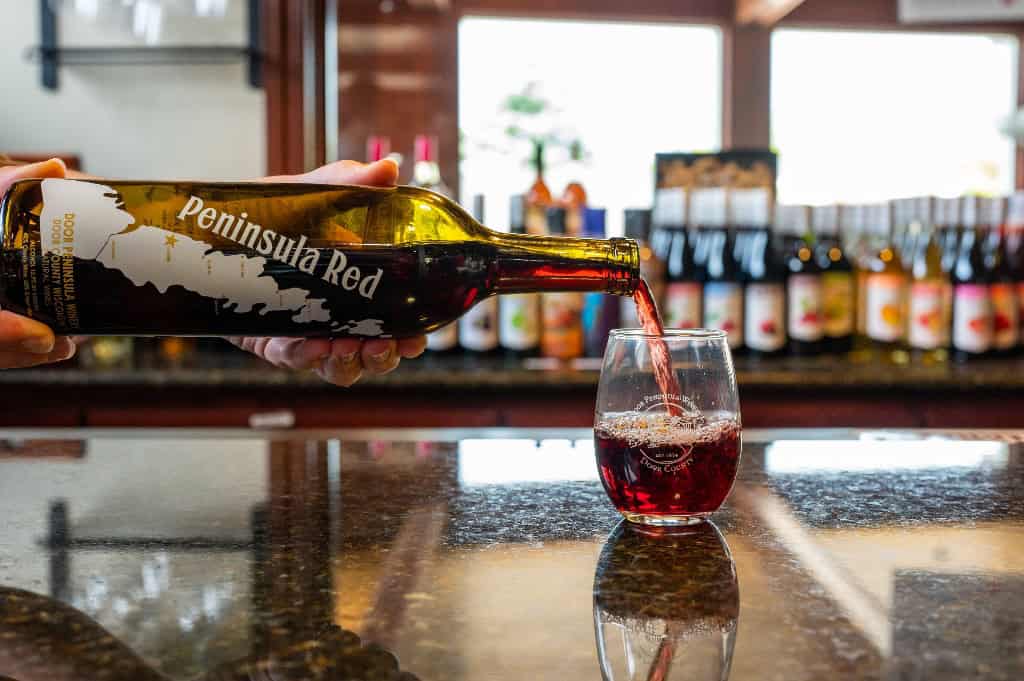
Most people associate beer, brats, and cheese with Wisconsin. But did you know the Dairy State also has a growing wine industry? According to a study by the National Association of American Wineries, the Wisconsin wine industry brought in over $4.5 billion in 2022.
Wisconsin has over 110 wineries across the state that are divided into five different wine regions:
- Northwoods Region
- Driftless Region
- Fox Valley Region
- Glacial Hills Region
- Door County Region
The state’s Driftless Wine Region is part of the Upper Mississippi Valley AVA, the largest American Viticultural Area (AVA) in the U.S. Wisconsin’s two other AVAs are the Lake Wisconsin AVA, located along the Wisconsin River and the Wisconsin Ledge AVA, located on the Door Peninsula.
Because of the harsh winters, most grapes grown in Wisconsin are hardy, cold-climate varietals that can withstand the brutal Wisconsin winters when temperatures dip as low as -30°. Wisconsin grapes used for white wines include La Crosse, La Crescent, Frontenac Blanc, and St. Pepin. Wisconsin grapes used for red wines include Marechal Foch, Frontenac, and Marquette.
11 Best Wisconsin Wineries
With so many wineries scattered around the state, it’s hard to pinpoint the best Wisconsin wineries. Wine drinkers have different tastes. Personally, I enjoy wines on the drier side, but many people love sweeter wines.
For this list of the best wineries in Wisconsin, I focused more on wineries that produce estate-grown wines, which are wines made from grapes grown in the winery’s own vineyard. Wisconsin wineries also make their wines with grapes from New York, Oregon, and California vineyards.
1. Wollersheim Winery
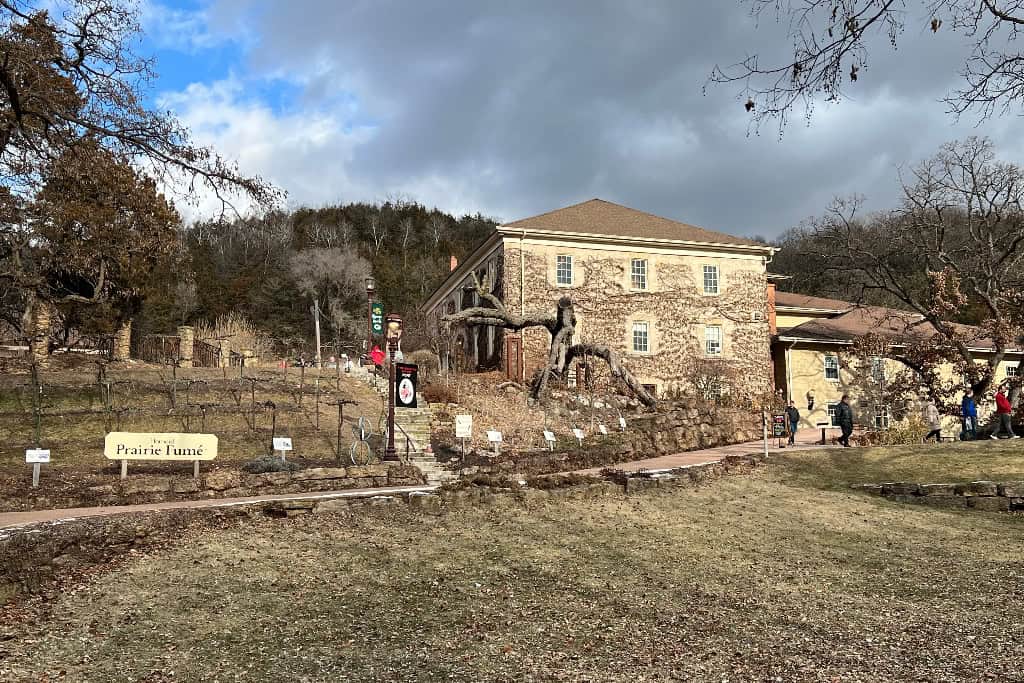
Situated in the rolling hills along the Wisconsin River near Prairie du Sac and Sauk City, Wollersheim Winery is perhaps Wisconsin’s oldest vineyard. The first grape vines planted in the state were planted on the land in the 1840s by Hungarian nobleman Agoston Haraszthy. After Haraszthy moved his winemaking to California, German immigrant Peter Kehl and his family ran a winery on the property between 1849 and 1899, after which the vineyard was converted to farmland.
The vineyard was reborn in 1972 after Robert and JoAnn Wollersheim bought the property. Today, the winery is still operated by the Wollersheim family as well as French winemaker Philippe Coquard and his family. A distillery was added to the property in 2015.
Wollersheim Winery’s most popular wine is Prairie Fumé, a refreshing, semi-dry white wine made completely with Seyval Blanc grapes from New York. The grapes grown in Wollersheim vineyards include three white varietals – St. Pepin, LaCrosse, and Brianna– and three red varietals – Maréchal Foch, Léon Millot, and Marquette. Those grapes are used to make eight estate wines. The winery also makes wines with grapes from vineyards in New York and Washington.
2. Cedar Creek Winery
Cedar Creek Winery in historic downtown Cedarburg is a sister winery to Wollershiem. Located on the site of an old woolen mill, the building was transformed into a winery in 1972. It operated as Newberry Winery and then Stone Mill Winery until the Wollersheim family bought it in 1990 and changed the name to Cedar Creek Winery.
At Cedar Creek Winery, you’ll find its own labeled wines, as well as Wollersheim wines. Many of the grapes used to create Cedar Creek’s wines come from Wollersheim Winery. Its award-winning Waterfall Riesling is a semi-dry white made from white riesling grapes grown in Washington State. A seasonal winter favorite is its Cedarburg Spice, which is a Maréchal Foch wine that is steeped in spices, making it perfect to enjoy as a warm mulled wine.
If you visit Cedar Creek Winery, make sure to also check out the Chiselled Grape Winery located right across the street. Its Sexy Wine Series includes reds, whites, rosés, and dry and sweet wines sourced from California vineyards.
3. Parallel 44 & Door 44 Wineries
Husband and wife duo Steve Johnson and Maria Milano traded in law careers to follow their dream of opening a winery. In 2005, they bought a cornfield and former gravel pit in Kewaunee, located east of Green Bay, for their first winery, Parallel 44. The name of the winery is ode to its location along the 44° parallel, the same latitude that traverses renowned wine regions like Bordeaux and Tuscany. In 2013, the winemaking couple opened a sister winery, Door 44, in picturesque Door County.
Most Parallel 44 and Door 44 wines are made with estate grapes from vineyards in northern Wisconsin. These winter-hardy grapes include Maréchal Foch, Frontenac, Louise Swenson, St. Pepin, and Petite Pearl.
Parallel 44 and Door 44 wines are consistently recognized with awards from the International Cold Climate Wine Competition. Its La Crescent wine, a semi-sweet medium-body white wine similar to Moscato, is its most popular wine. It has also been recognized for its Ice Wine, a sweet dessert wine made from frozen St. Pepin grapes.
4. Chateau St. Croix Winery
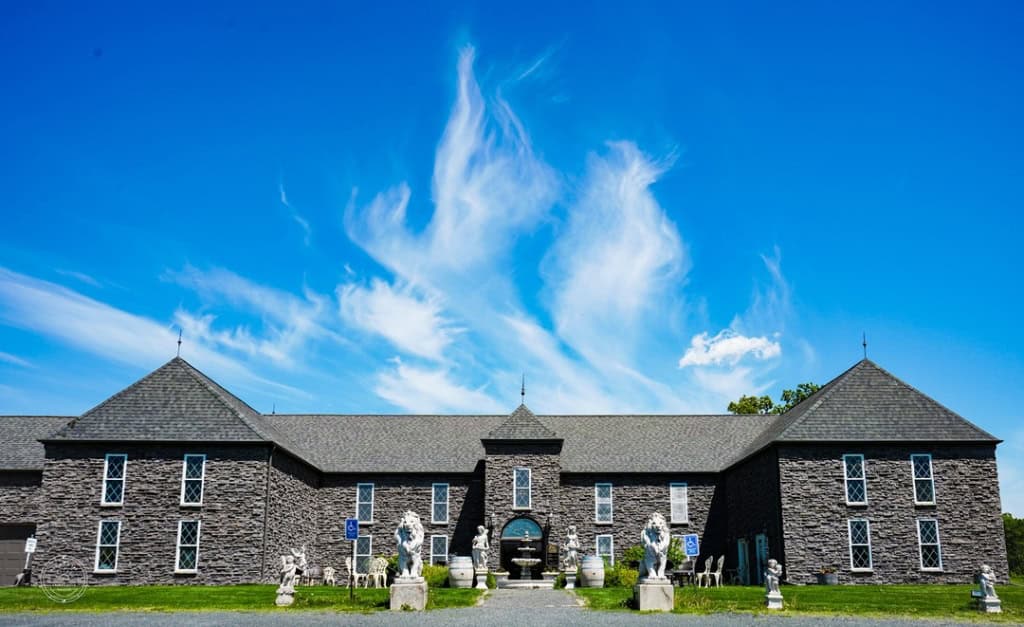
In Northwestern Wisconsin, close to the Minnesota border, there’s a replica French chateau that is home to the Chateau St. Croix Winery. Minnesota winemaker Irv Geary purchased the winery in 2018, and since then, the Chateau St. Croix wines have earned golde medals and 90+ ratings in wine competitions across the country.
Two-thirds of Chateau St. Croix wines are made with locally-grown grapes in Wisconsin as well as neighboring Minnesota wineries that Geary also owns. When Geary bought the winery, it was known for its amazing port wines, and he continued the legacy.
Chateau St. Croix’s award-winning wines include its Chateau Rosé, a rose made with Frontenac and Maréchal Foch grapes; Thoroughbred Red, a medium-bodied red wine made from a blend of Marquette and Frontenac grapes and aged in French oak casks; and Chateau Blanc, a crisp white wine blend of La Crescent and Sauvignon Blanc grapes.
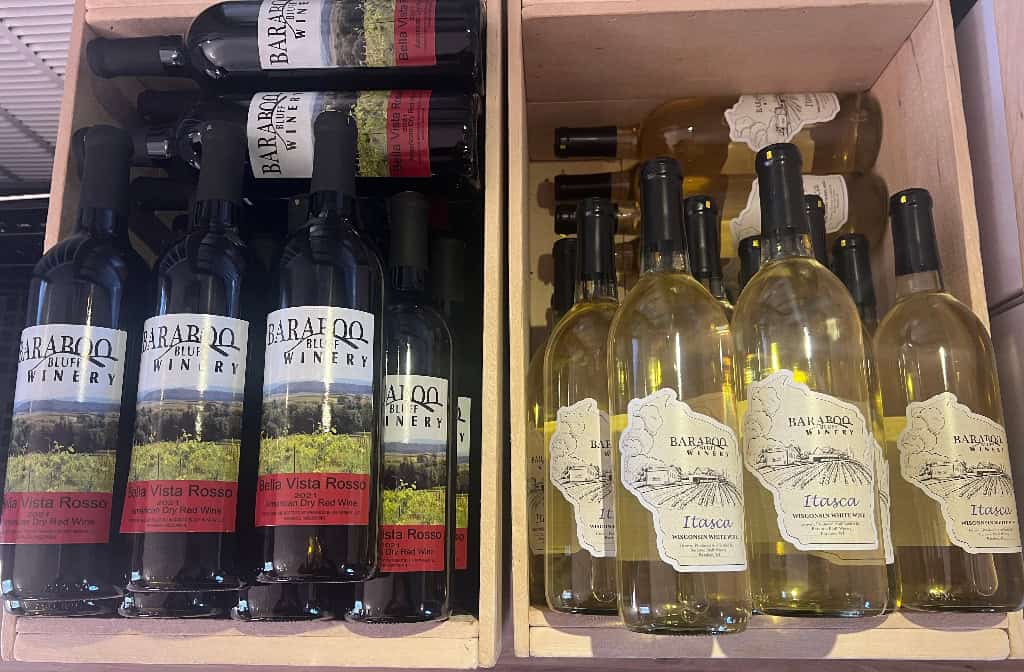
5. Baraboo Bluff Winery
Nestled atop the scenic Baraboo Bluffs in Wisconsin’s Driftless wine region is the Baraboo Bluff Winery. Opened in 2015 by Fred and Jill Quandt, the winery offers visitors a place to enjoy local wines in a relaxing atmosphere with panoramic vistas of rolling hills and lush vineyards.
Baraboo Bluff Winery specializes in a variety of locally produced wines, from crisp whites to rich reds, many of which are made with estate grapes grown on the property, such as Petite Pearl, St. Pepin, Lacrosse, and Frontenac varietals.
Baraboo Bluffs’ most popular wine is The Girlfriend, a sweet white wine made with Aurore grapes from the New York Finger Lakes region. Its Color Me Cab Cabernet Sauvignon was a gold medal winner at the Finger Lakes International Wine Competition, and its 2023 Prairie Star was a silver medal winner.
The Quandt family opened a second winery, Broken Bottle Winery, in 2019. It is located just about 10 miles from Baraboo Bluffs Winery and features several of its own labeled wine, such as its Mama’s Porch St. Pepin dry white wine, semi-dry Redneck Rose, and Hillbilly Holiday sweet spiced red wine.
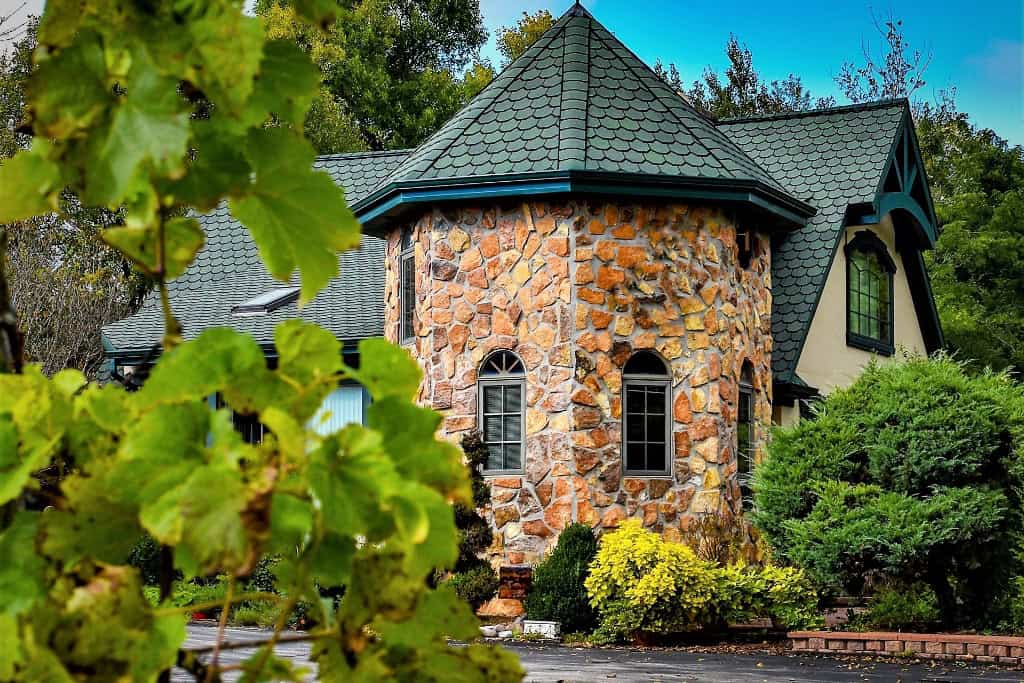
6. Trout Springs Winery
Trout Springs Winery was one of the first vineyards to be planted in Northeastern Wisconsin. In 1995, Steve and Andrea DeBaker started planting vines in an old pasture at their Branch River Farms property in Greenleaf. They planted Maréchal Foch, Leon Millot, St. Croix, St. Pepin, Lacrosse, and Swenson’s Red varietals. The vineyard produced its first harvest in 2001, and the winery officially opened to the public in 2005.
Many of Trout Springs’ wines are made from estate-grown grapes, as well as fruits like cranberries, peaches, and Door County cherries. It even has a maple syrup-based wine called Cocomotion. Trout Springs Winery’s Below Zero is one of the only red ice wines made in the U.S.
Trout Springs Winery is located in the heart of the Wisconsin Ledge AVA, an American Viticultural Area (AVA) in northeastern Wisconsin, which Steve DeBaker was instrumental in getting approved by the federal government. The 2.5-million-acre prime grape-growing region located along the Niagara Escarpment is now home to about 24 wineries.
Wine isn’t the only thing Trout Springs is known for. There is also a licensed trout hatchery and the Sassy Girl microbrewery located on-site.
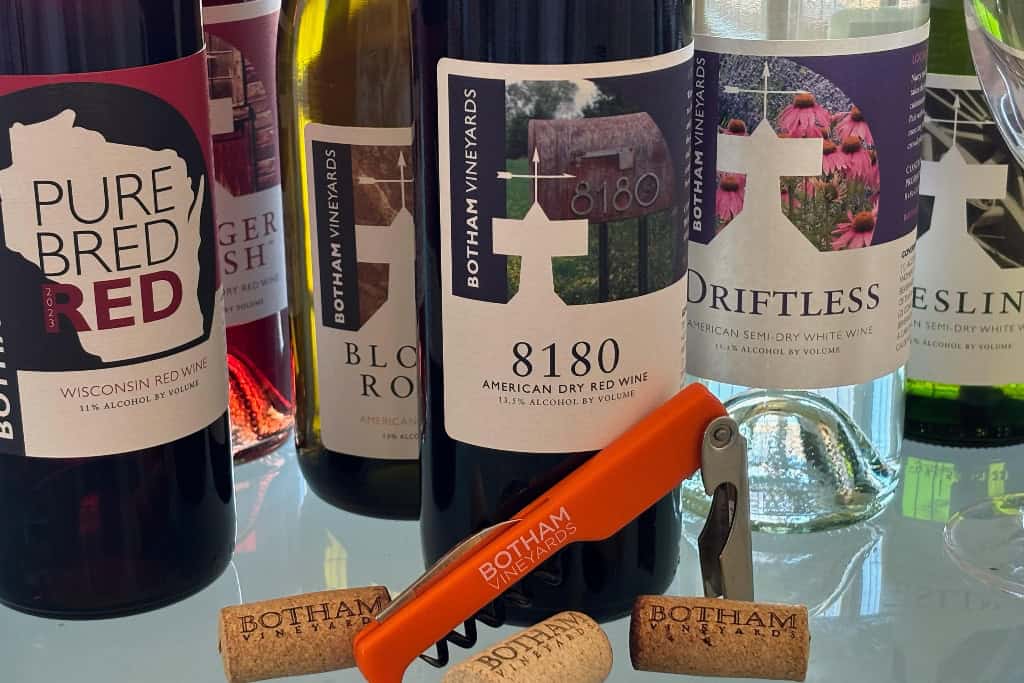
7. Botham Vineyards
Set amid the rolling hills of South Central Wisconsin is Botham Vineyards and Winery, which was founded by Peter Botham in 1989. The family-owned winery is known for producing premium regional wines, many of which are made with estate-grown grapes.
Botham Vineyard primarily grows grapes for red wines, such as Maréchal Foch and Leon Millot. Its most popular wine, Big Stuff Red, is a semi-dry Maréchal Foch that won a double gold medal at the San Francisco International Wine Competition. Its Uplands Reserve wine, also made with Maréchal Foch grapes, was once named “Wisconsin’s Best Wine” by Epicurious.com.
Many of the grapes used for Botham’s white wines are sourced from New York’s Finger Lakes Region. Its white wines include Cupola, a semi-dry Seyval Blanc, and Vin 10, a semi-dry Geisenheim wine.
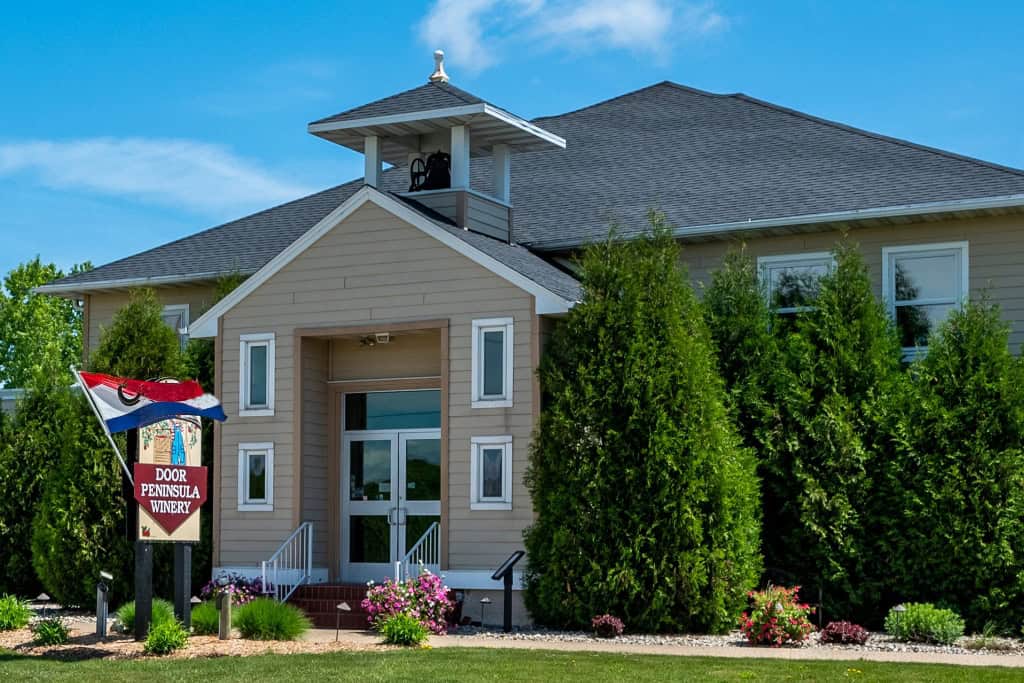
8. Door Peninsula Winery
Door Peninsula Winery was born in a two-room schoolhouse in Carlsville, Wisconsin, in 1974. Originally, the two men who started the winery used locally grown fruits like cherries and apples to make the wine because the area in Northeastern Wisconsin was too cold to grow grapes.
After the winery was purchased by Bob and Noreen Pollman in 1984, it continued to expand the fruit wines it produced and also began making more traditional grape wines using more hardy cold-climate varietals. The Door Peninsula Winery and Vineyard is located within the Wisconsin Ledge AVA, and it is one of 10 wineries that make up the Door County Wine Trail.
Door Peninsula’s Blackberry Merlot is one of its oldest and most popular wines. Another fan favorite is its Cranbernet, which is a blend of Wisconsin cranberries and Cabernet Sauvignon. Beyond its wines, Door Peninsula also produces a line of award-winning ciders. And, in 2011, the Pollman family expanded to open Door County Distillery.
9. von Stiehl Winery
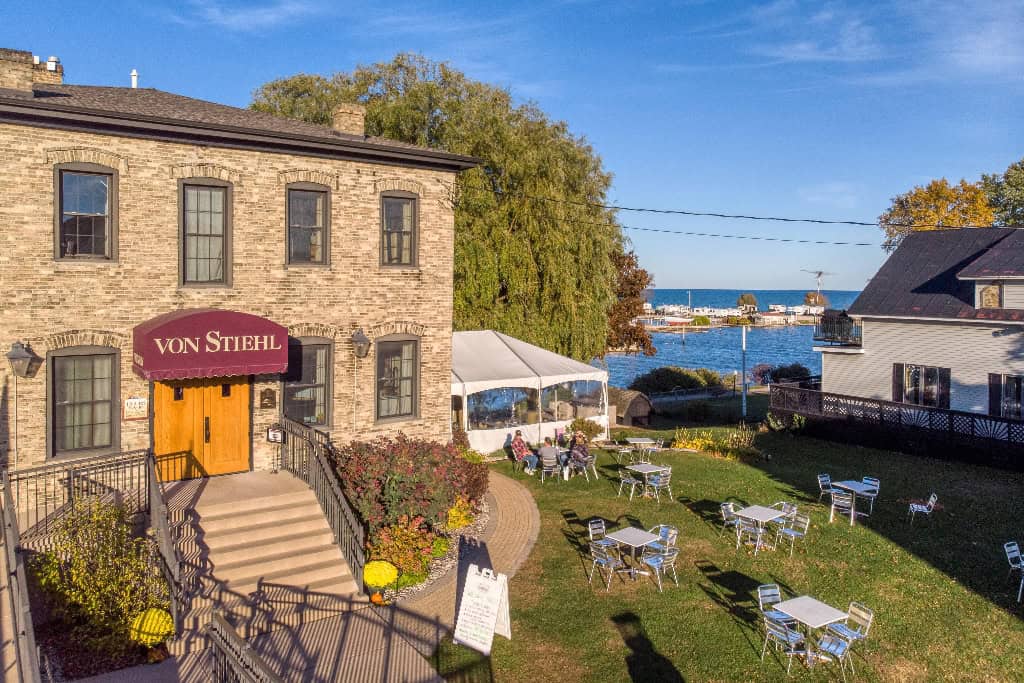
While Wollersheim may be the oldest vineyard in Wisconsin, Von Stiehl Winery in Algoma is the oldest official winery. Physician Dr. Charles von Stiehl was the first Wisconsinite to get a license to sell wine when he founded Von Stiehl Winery in 1967. His first wine was Door County Cherry Wine, made with Montmorency cherries native to the area.
The winery was sold to the Schmiling family in 1981, and they continue to run its operations today, with sons Aric and Brad at the helm. A variety of wines have been added to the menu since the Schmilings bought the business, including wines made from estate grapes grown at the family’s nearby Stony Creek Vineyard, as well as from California, Washington, New York, and Michigan.
The winery continues to use Dr. von Stiehl’s original recipes for its Sweet Cherry and Dry Cherry wines. It has won awards at the Finger Lakes International Wine Competition for its semi-dry Riesling, Old Vine Zinfandel, and Soaring Eagle Cabernet Sauvignon.
10. Villa Bellezza Winery
Visiting the Villa Bellezza Winery in Pepin is like being transported to the Italian wine country, and that is exactly the experience winery owners Derick and Julianne Dahlen want you to have. Located along the Great River Road Wine Trail, the grounds of Villa Bellezza Winery are designed like a small Italian village, complete with a water fountain in the middle of the piazza.
Many of the wines produced at Villa Bellezza Winery are made from about 12 different grape varietals grown on the 11-acre site and other areas in Pepin. The winery’s St. Pepin white wine has been recognized by the Winemakers Challenge International Wine Competition. It has also received gold medals at the San Diego International Wine & Spirits Challenge for its Zitella, a semi-sweet white blend of La Crescent and Prairie Star grapes, and Cotes du Pepin, a dry La Crescent and Prairie Star blend.
11. Timber Hill Winery
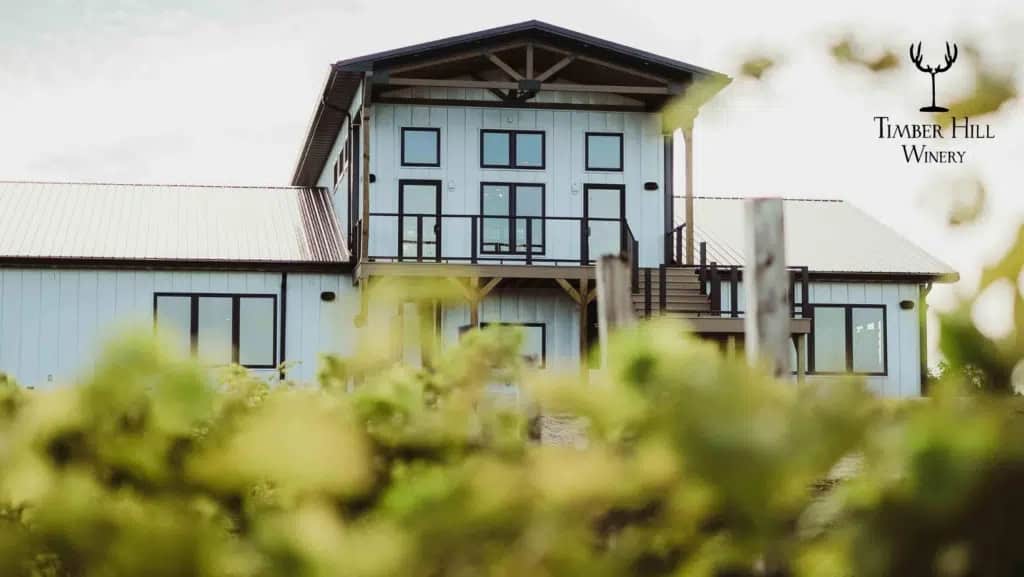
Amanda Stefl of Timber Hill Winery in Milton may be Wisconsin’s youngest winemaker. Stefl started making wine after completing her bachelor’s degree in microbiology from the University of Iowa. After college, got a job in a lab but soon found out it wasn’t for her. She discovered her true passion when she started taking winemaking classes. In 2016, she opened Timber Hill Winery near her hometown of Janesville, Wisconsin.
In 2023, Timber Hill Winery moved from its original location in an industrial park to a new building built on farmland where it also has a vineyard. The new location offers a larger tasting room and dining area, and more outdoor patio space.
Timber Hill Winery partners with several Wisconsin vineyards to get grapes for its wines, including Hav Vineyards in Port Washington, Three Branches Vineyard in Spring Green, and Pine Grove Vineyards in Batavia.
Timber Hill offers over 40 different wines, most made with Wisconsin grapes like its award-winning Marquette Red. Its popular Social Sweet Series includes seven sweet wines named for each day of the week. There’s Margarita Monday, Tuesday Boozeday Blush, and Finally Friday Fiery Red. All the Social Sweet Series wines are also available in pouches that would be great to enjoy out on a boat (think a Capri Sun with a kick).
By far the most unique wine to Timber Hill, if not the rest of Wisconsin, is its Jalapeno Wine. While you can drink this on its own (if you dare), it ideally goes best as a mixer for margaritas or bloody marys.
Best Time To Visit
The best time to visit Wisconsin wineries depends on the kind of experience you’re looking for. The summer and fall months, particularly from June to October, are the most popular times to explore the state’s vineyards. During this period, the weather is pleasant, and the grapevines are lush and full. Many wineries host outdoor tastings, live music, and food pairings, making it a lively and enjoyable time for visitors.
If you prefer a quieter experience, visiting in the late spring or early summer—around May or early June—can be a great choice. The crowds are smaller, and you may have more opportunities for personalized tastings and in-depth conversations with winemakers.
September and October is an ideal time to experience the grape harvest. Many wineries offer special harvest events where guests can participate in grape stomping or guided vineyard tours. The autumn colors also add to the scenic beauty, making it a great time for wine lovers to appreciate the picturesque landscapes of Wisconsin.
Regardless of when you visit, Wisconsin’s wineries offer a combination of charming rural settings and high-quality wines, making any visit memorable.
FAQs
How many wineries are in Wisconsin?
Wisconsin has over 110 wineries located within five distinct wine regions across the state. Not all of these wineries have their own vineyards, and some make their wines using grapes from other states, like New York or California. There are also wineries that use fruits other than grapes, like apples, cherries, and cranberries, to make their wine.
Does Wisconsin have good wine?
Yes, Wisconsin has good wine. While Wisconsin may not be as famous for wine as California or Oregon, its wineries offer a diverse selection, from dry reds and whites to sweet, fruit-forward wines. Every year, Wisconsin wines are recognized at the Finger Lakes International Wine & Spirits Competition and the International Cold Climate Wine Competition.
What wine is Wisconsin known for?
Wisconsin is best known for its wines made from cold-hardy grapes and fruit wines. Cold climate varietals like Marquette, Marchel Foch, La Crescent, and Frontenac grow well in Wisconsin vineyards. As the “Cranberry Capital of the World,” Wisconsin winemakers also use the official state fruit to make wines.
Conclusion
Wisconsin’s wine industry is a hidden gem, offering a diverse array of wineries that produce high-quality wines despite the state’s challenging climate. From historic establishments like Wollersheim Winery and Von Stiehl Winery to innovative newcomers such as Timber Hill Winery, the state boasts a rich winemaking tradition that continues to evolve. Whether you prefer estate-grown wines, fruit-infused blends, or unique creations like jalapeño or maple syrup wine, there’s something for every palate.
A visit to Wisconsin’s wineries is more than just a tasting experience—it’s an opportunity to explore scenic vineyards, engage with passionate winemakers, and immerse yourself in the state’s growing wine culture. No matter when you visit, Wisconsin’s wineries provide a warm and welcoming atmosphere, making them a must-visit destination for both casual wine lovers and connoisseurs alike. So, whether you’re exploring the Driftless Region, Door County, or the Northwoods, raise a glass and savor the flavors of Wisconsin’s flourishing wine scene.